Abstract:
Synthetic biology is an emerging technology combining information technology and biology. One notable presumption of synthetic biology is that scientists, with the assistance of computers, can create new life form without using naturally occurring organisms as references. However, it may be an overstatement in practice, because, even a single-base variation in a genome might dictate whether the synthetic organism could survive. Unlike the open source in information technologies, the open-source movement in synthetic biology raises biosafety concerns. The Article proposed a modified version of open source for the development of synthetic biology.
Download article here: http://papers.ssrn.com/sol3/papers.cfm?abstract_id=1990113
Carousel of books I enjoyed reading
Showing posts with label DIY Biotechnology. Show all posts
Sunday, January 29, 2012
Monday, January 23, 2012
Monday, November 7, 2011
Easily 'Re-programmable cells' could be key in creation of new life forms
I wonder if i ever get to write my own 'Hello World' app on a cell :
Scientists at The University of Nottingham are leading an ambitious research project to develop an in vivo biological cell-equivalent of a computer operating system.
Sunday, September 18, 2011
NSF : A Call to Arms for Synthetic Biology
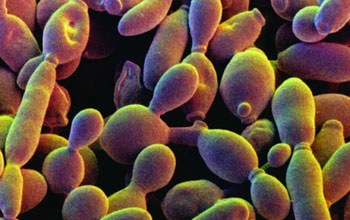
Scientists have replaced all of the DNA in the arm of a yeast chromosome with computer-designed, synthetically produced DNA that is structurally distinct from its original DNA to produce a healthy yeast cell.
Read more : http://www.nsf.gov/news/news_summ.jsp?cntn_id=121639&WT.mc_id=USNSF_51&WT.mc_ev=click
Monday, September 5, 2011
Another introduction to Synthetic Biology
An introduction to Syntethic Biology posted on youtube by The university of Bristol
Friday, June 24, 2011
Synthetic Biology Fact Sheet - Office of Naval Research
Interesting stuff and future applications here (http://www.onr.navy.mil/en/Media-Center/Fact-Sheets/Synthetic-Biology.aspx) :
The Office of Naval Research (ONR) Synthetic Biology Program aims to develop transformational approaches to multiple naval application areas. Products will include living organisms with the capability to produce, deliver, detect and respond to compounds, or to provide command and control to nonliving miniaturized devices.
Secure and sustainable production of high-value materials, such as energetic materials or future naval fuels, may be achieved using synthetic biology. For example, both bacteria and plants have been engineered to use sugars, carbon dioxide and sunlight to produce intermediates for the production of TNT and TATB (triaminotrinitrobenzene, an aromatic explosive).
Living sentinel species have also been generated, which may allow ‘plug and play’ approaches for design of systems that can sense and respond to threats. The illustration above shows leaves of plants that have been programmed to respond to the detection of TNT vapor by turning white. The color change can be detected using remote spectral imaging systems.
Part of ONR’s program is centered on developing more of the synthetic biology tools needed to advance the field, such as methodology to produce large, multigene sequences, stimuli-responsive regulatory sequences and methods for rapidly adapting cells to perform new functions.
As ONR learns more about how living organisms work and how their functions are controlled at a genetic level, it will expand the repertoire of functions and pathways available for designing new organisms. Ultimately, engineered cells may be used to control and make decisions for a non-living nano or micro device through the cells’ processing of environmental information and translation into signals interpretable by that device.
Friday, August 20, 2010
Synthetic biology, ethics and the hacker culture
by ANDREW MAYNARD on AUGUST 17, 2010
While the DIY Biotechnology community has grown considerably since this post, the piece still captures something of what is still a young movement, and one that challenges assumptions about top-down technology innovation.
Read more: http://2020science.org/2010/08/17/synthetic-biology-ethics-and-the-hacker-culture/#ixzz0x9hpkhn3
While the DIY Biotechnology community has grown considerably since this post, the piece still captures something of what is still a young movement, and one that challenges assumptions about top-down technology innovation.
Read more: http://2020science.org/2010/08/17/synthetic-biology-ethics-and-the-hacker-culture/#ixzz0x9hpkhn3
Subscribe to:
Posts (Atom)